


Lot n° 48
Estimation :
500 - 700
EUR
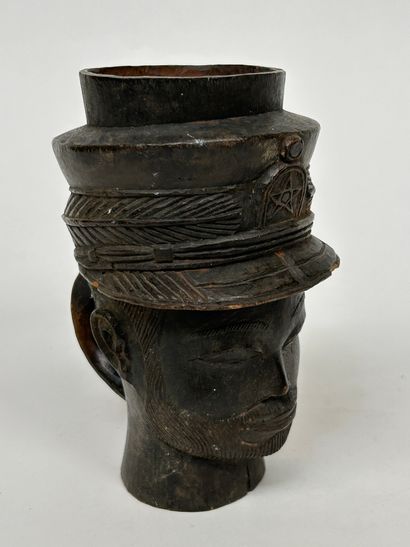
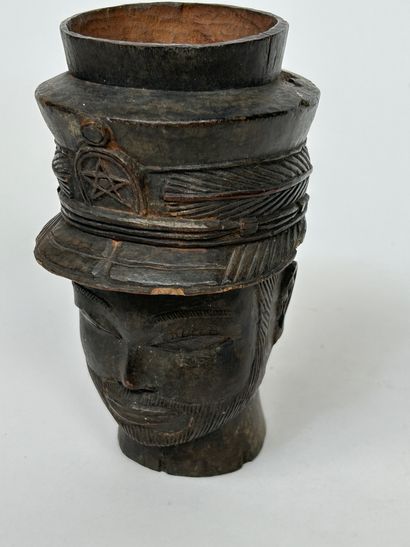
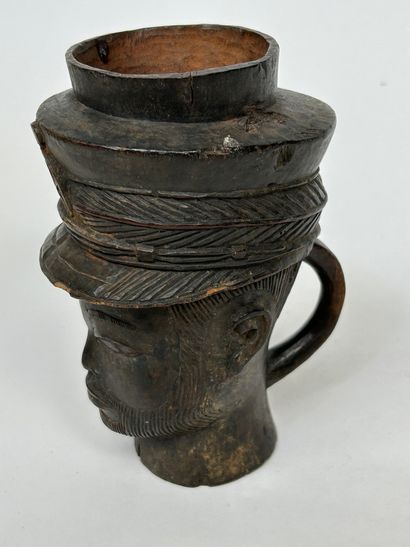
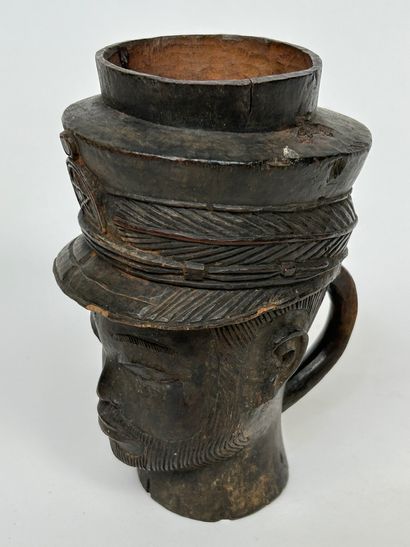
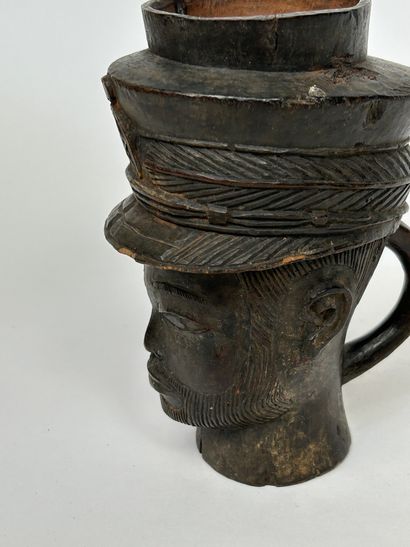
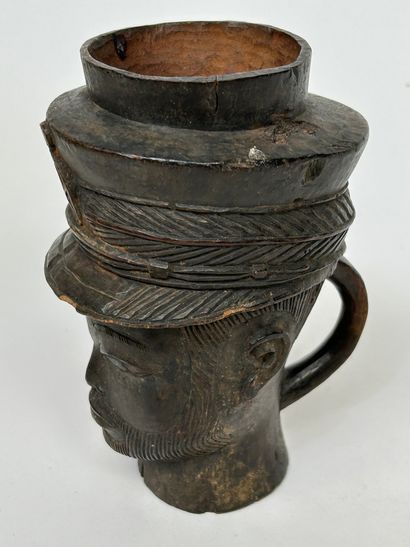
Officer's head" libation cup, Kuba, Democratic Republic of C - Lot 48
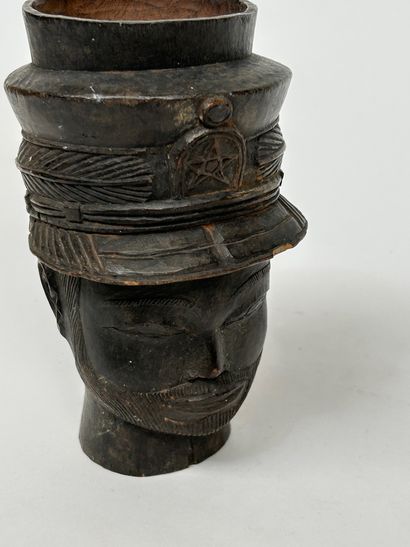
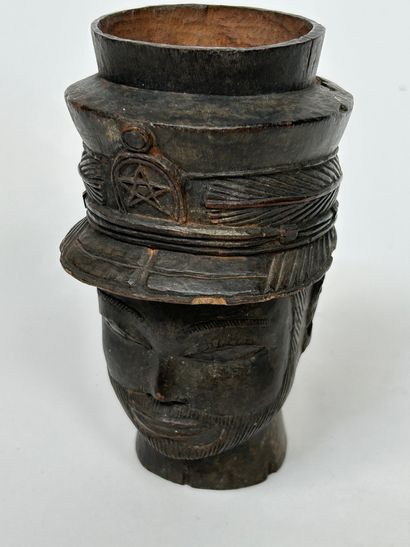
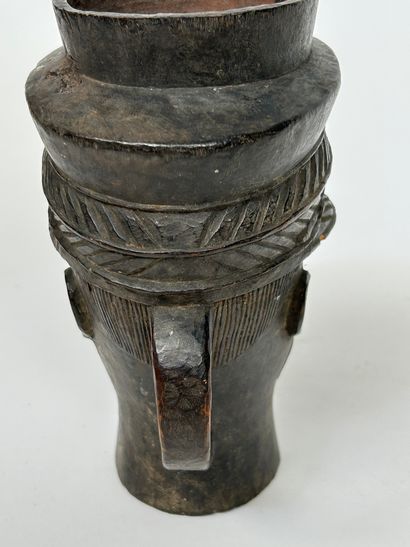
Officer's head" libation cup, Kuba, Democratic Republic of Congo
Early 20th century
Wood, patina of use
Height: 18 cm
Provenance: Rieunier et associés sale, July 1, 2009, lot 49
Former Pascal Alcan-Legrand collection, Paris
French private collection
----
Libation cup "head officer", Kuba, Democratic Republic of the Congo
Early 20th century
Wood, patina of use
Height: 18 cm
Provenance: Old collection Pascal Alcan -Legrand, Paris
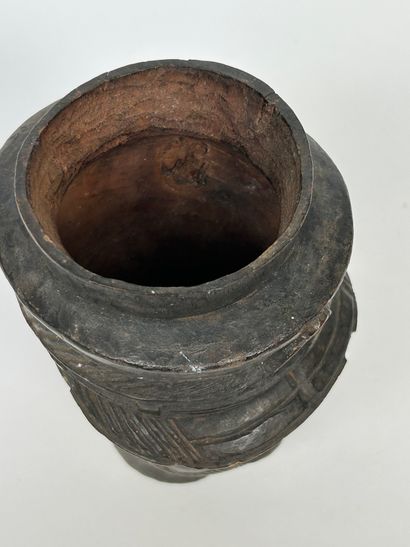
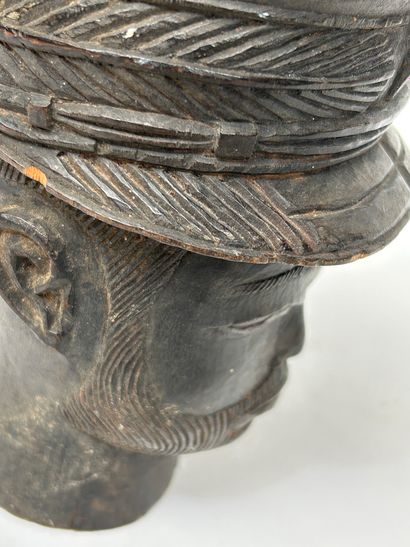
Traditionally used by Kuba chiefs and notables to drink palm oil, figurative cups were symbols of power and wealth, exalting the social prestige of both the artist and his patron. Our example breaks with this paradigm: instead of a classical figure, it depicts the head of an officer wearing a colonial helmet. This substitution reverses iconographic and symbolic codes: the object, a vector of prestige, places the figure of colonial authority at the heart of its representation, marking an inversion of power relationships. Our object adopts the conventional codes - a human head flanked by a lateral handle, the upper part hollowed out to pour the drink into. But the figure of the colonist, who replaces the Kuba ideal of beauty, is recognizable by his officer's helmet, the ultimate symbol of colonial power and authority. The composition tends towards a pronounced naturalism: large almond-shaped eyes with drawn eyelids, a nose with hemmed nostrils, a mouth with pursed lips and finely detailed ears. The eyebrows and beard, in slight cross-hatching relief, are also depicted with great realism. The imposing visored helmet features insignia, in particular a central motif in relief likened to the swastika. The swastika symbol has ancient origins. In Europe, it already appeared on pre-Christian artefacts, and in Eurasia, it is thought to have been used around 7000 years ago, to represent the movement of the sun during the day. In the nineteenth century, Europeans reappropriated the symbol through the artistic and literary movement of Orientalism, which was accompanied by the discovery of the ancient civilizations of India and the Near East. By the early twentieth century, the motif was widely represented and associated with luck, where it was used in a variety of contexts. At the time, the idea of an Aryan culture shared between Europe and Asia was popular among certain scholars and ideologists. The swastika, seen as an ancient and revered symbol, was used to symbolize this shared culture and, in the imagination of the time, embodied the extension of Western power. The motif already carried a strong ideological charge in Europe, where it was perceived as a symbol of Western continuity and grandeur, contributing to its appropriation and hijacking by the German far-right party in the 1920s.
Far from being anodyne, this unusual iconography is part of a vast artistic tradition in sub-Saharan Africa of depicting colonial figures, oscillating between fascination, derision and critical commentary. This singular work reveals the complexity of looking at power dynamics, and reveals the way in which these symbols, bearers of domination, are reappropriated and transformed into a mirror of colonial reality.
Traditionally used by Kuba chiefs and notables to drink palm oil, figurative cups were symbols of power and wealth, elevating the social prestige of both the artist and their patron. Our example breaks with this paradigm: instead of a classical figure, it depicts the head of an officer wearing a colonial helmet. This substitution creates a reversal of iconographic and symbolic codes: the object, once a vehicle for prestige, places the figure of colonial authority at the center of its representation, thus inverting the power dynamics. This object follows conventional codes - a human head flanked by a lateral handle, with the upper part hollowed out to pour the beverage. However, the figure of the colonizer, replacing the usual Kuba ideal of beauty, is identifiable by its officer's helmet, the quintessential symbol of colonial power and authority. The composition leans toward pronounced naturalism: large almond-shaped eyes with drawn eyelids, a nose with flared nostrils, a mouth with pursed lips, and finely detailed ears. The eyebrows and beard, in slight raised hatching, are also rendered with great realism. The imposing visor helmet bears insignia, notably a central relief motif resembling the swastika. The swastika has ancient origins. In Europe, it appeared on pre-Christian artifacts, and in Eurasi
My orders
Sale information
Sales conditions
Return to catalogue