


Lot n° 5
Estimation :
1500 - 2000
EUR
Register for the sale on drouot.com
Leave absentee bid
Your amount
EUR
Bid by phone
Bid by phone
Your amount
EUR
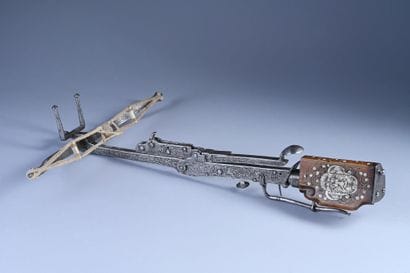
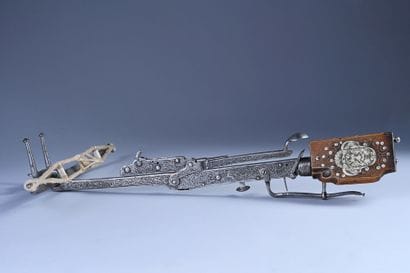
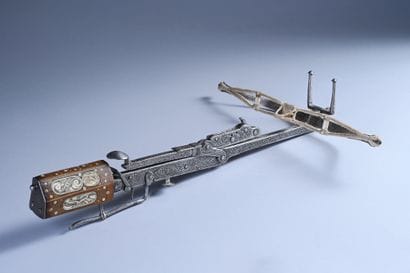
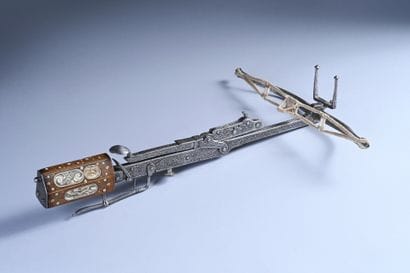
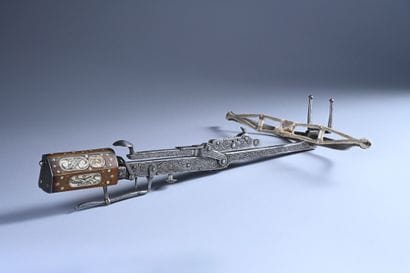
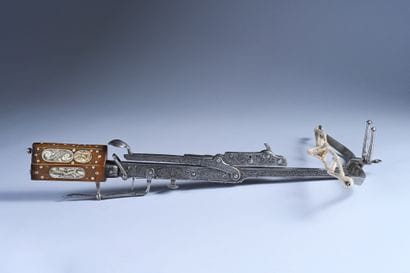
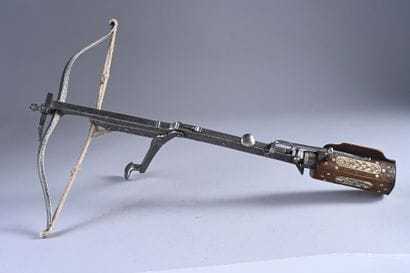
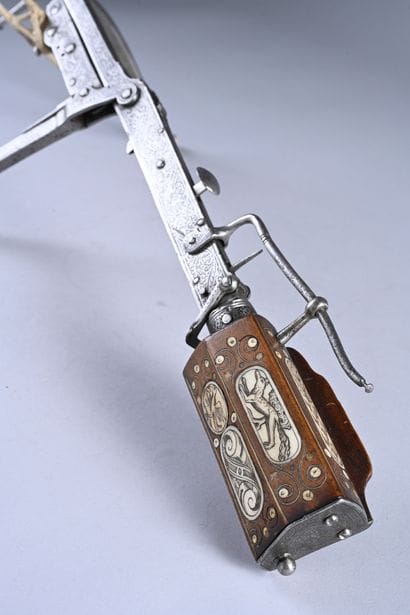
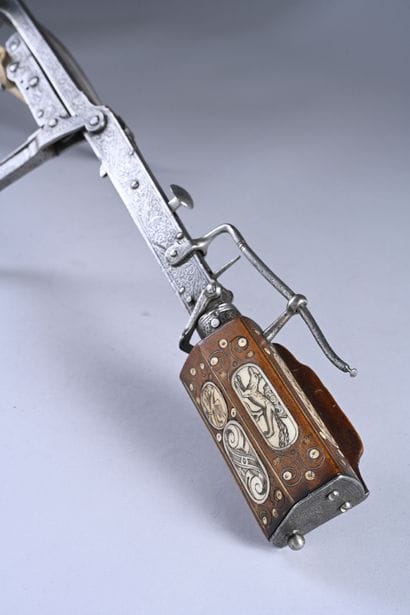
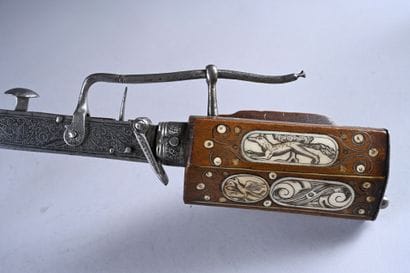
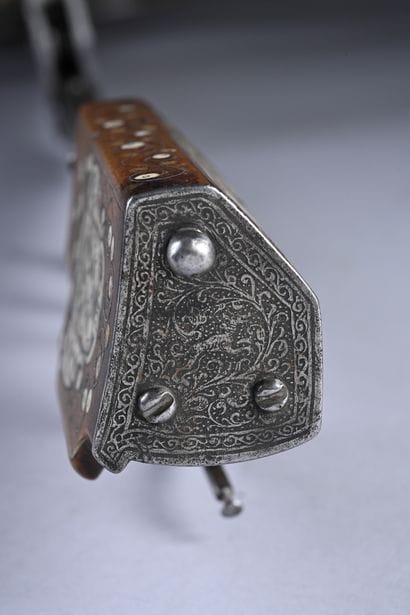
Javelin crossbow, known as a “balestrin.” The stock, bow, lo - Lot 5
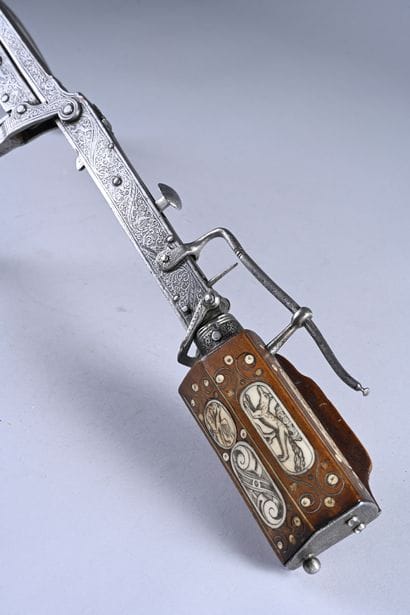
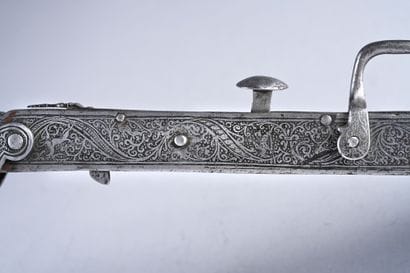
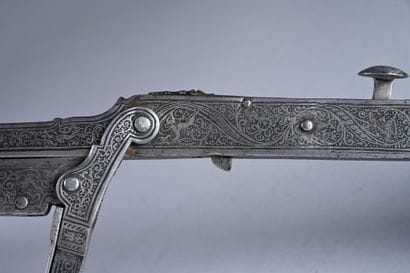
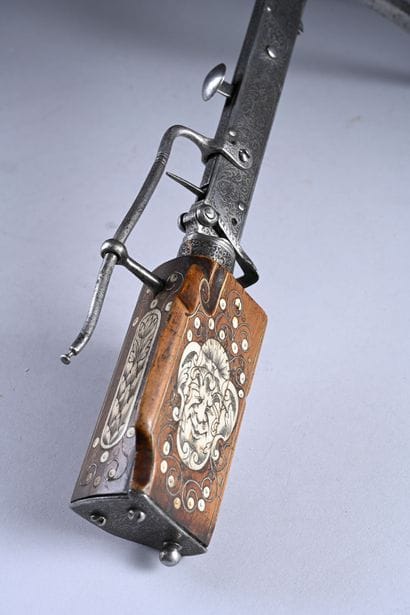
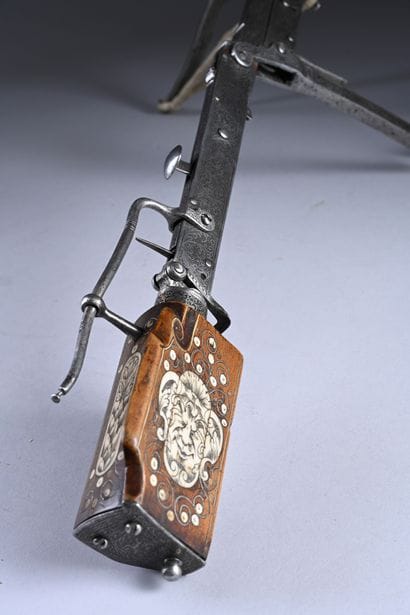
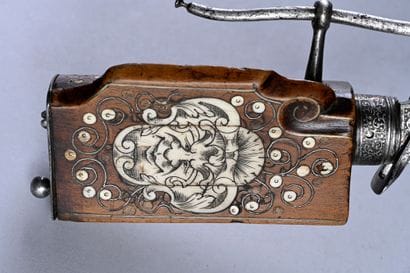
Javelin crossbow, known as a “balestrin.” The stock, bow, lock mechanism, and bolt guide are made of engraved wrought iron; the stock is crafted from fruitwood inlaid with bone and iron filigree; the string is made of gut and bone; and the quiver is made of parchment. A remarkable decorative pattern of interlacing foliage, framing hunting scenes, extends across the entire stock, lever, trigger guard, and trigger: hunting dogs, deer, wild boars, and birds stand out amidst opulent vegetation, set against a background of dots. The bow and the sight plate are themselves adorned with a frieze of interlaced patterns, and the stock features a fox, a bird, and coiled leather on one side, and a smiling mascaron on the other. The sighting pediment bears a coat-of-arms shield surmounted by a closed crown, featuring a spread-winged eagle bearing a divided shield, above a cartouche bearing the name “Jacob [...]ielb[e]l”; the tail of the lever bears two smith’s marks with the initials “MS” and a squirrel.
Germany, Thuringia?, first half of the 17th century
L.: 48.2 cm
(Signs of wear, oxidation)
Primarily used for hunting small game, the jalet crossbow (Schnepper) gave rise to a rich body of production from the 16th to the 18th century, exemplified in Germany by the workshops of Thuringia. The partially legible name on the sight plate may be that of the craftsman; it can be tentatively attributed, though without certainty, to Jacob Triebel (1541–1614), who is documented as a master blacksmith in Suhl beginning in 1590. Items of similar workmanship were offered by Thierry de Maigret on November 8, 2018 (lot 142) and by Bonhams in London on November 28, 2007 (lot 143), the latter also hallmarked with a squirrel.
My orders
Sale information
Sales conditions
Return to catalogue