


Lot n° 18
Estimation :
2000 - 3000
EUR
Register for the sale on drouot.com
Leave absentee bid
Your amount
EUR
Bid by phone
Bid by phone
Your amount
EUR
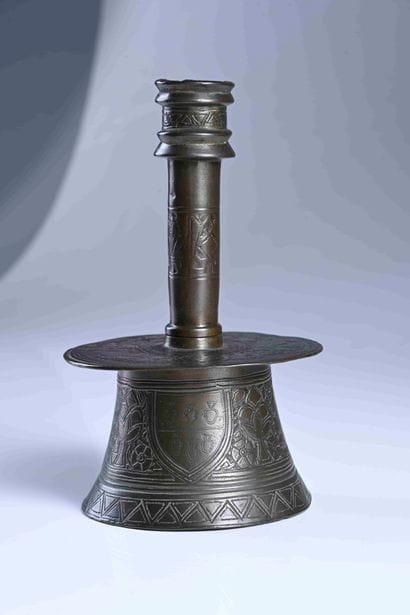
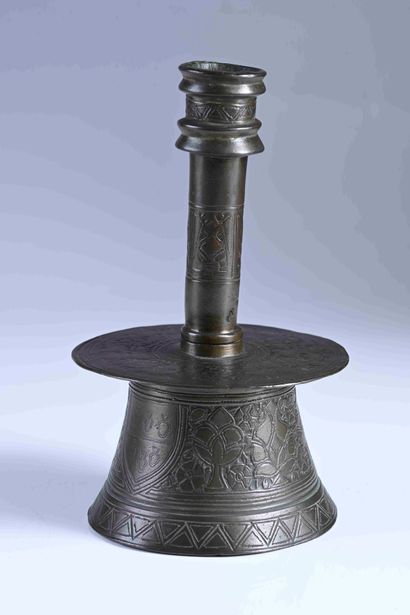
Small Mamluk candlestick made of rolled and engraved copper - Lot 18
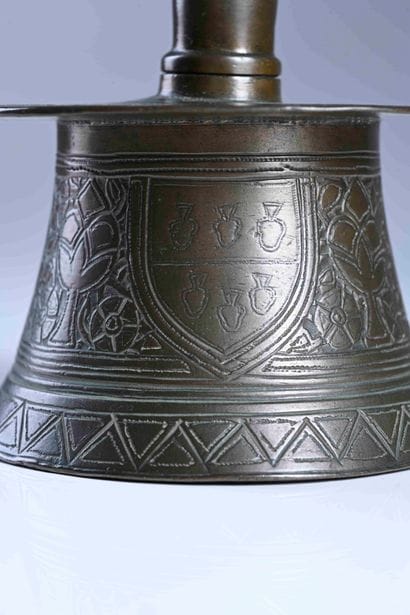
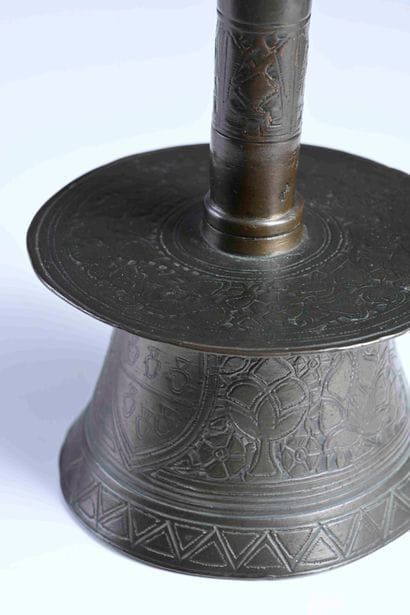
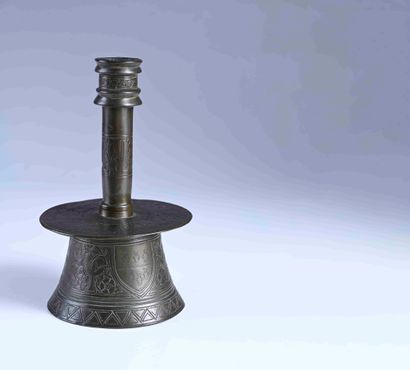
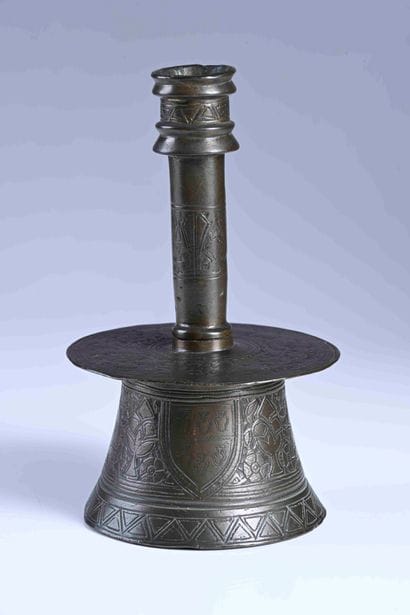
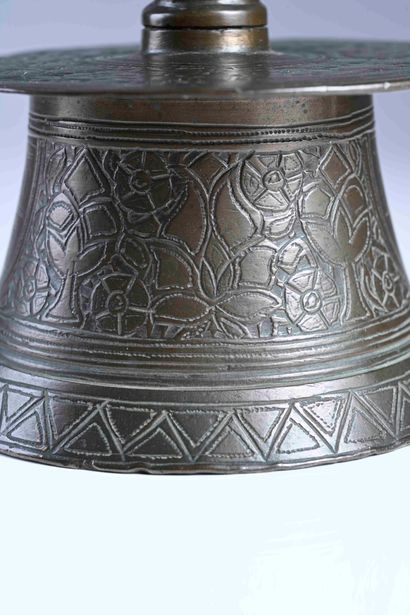
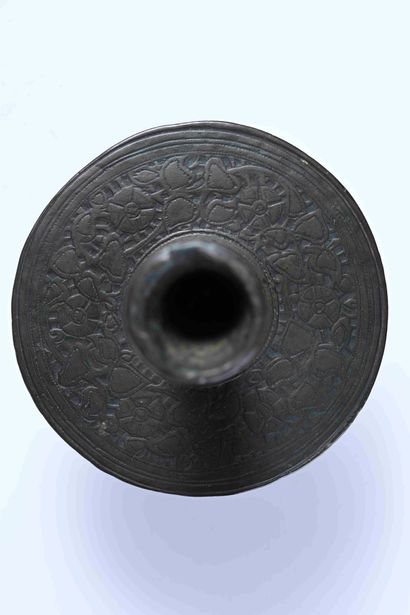
Small Mamluk candlestick made of rolled and engraved copper alloy, with a bell-shaped base surmounted by a disc-shaped plate, a slightly bulging truncated conical shaft, and a double-fluted cup. The slightly flared base is adorned with a frieze of staggered triangles, surmounted by a pattern of intertwined stylized floral motifs and shrubs, framing two heraldic shields. The top features an all-encompassing plant motif surrounded by a double molding, extended at the center by a slight bulge where the shaft fits into it, held in place beneath the base by a rivet. The shaft is decorated halfway up with a plant-inspired design evoking pseudo-Kufic motifs; the frieze of triangles adorning the spout echoes that of the base. Syria or Egypt, late 14th or early 15th century H.: 15.3 cm – Diameter: 9 cm
The shape and decoration of this object reveal the fusion of European models and Eastern copperwork techniques, the result of trade routes crisscrossing the Mediterranean in the late Middle Ages. While the shaft is reminiscent of that of Gothic candlesticks, the base and the engraved motifs adorning it are clearly of Levantine origin and reflect the productions of Syria and Egypt during the Mamluk dynasty (1250–1517). Intended primarily for the Italian market, this type of object is a smaller-scale version of the massive inlaid bronze candlesticks produced in the Islamic world, particularly in Damascus. The technique of assembling the pieces—cast separately and riveted together—is characteristic of the style and is enhanced here by a rich floral decoration in which traces of metal inlays can still be discerned; these were intended to heighten the contrast between the motifs and the background. The rise of the Ottoman Empire cemented Venice’s dominance in maritime trade in the eastern Mediterranean and contributed to the circulation of forms and motifs adapted to the tastes of Italian patrons. The hypothesis of Italian production involving Muslim artisans initially led to this style being dubbed the “Veneto-Saracen style,” but it is now established that these works were created in the Near East for the European market. The two shields appearing on the base allow this piece to be linked to a Florentine patrician family allied with the Medici, the Peruzzi (azure with six gold pears). The overall shape of the object, particularly that of the cup, has parallels in several public collections, notably at the British Museum (inv. 1855,1201.6). References S. Auld, *Renaissance Venice, Islam, and Mahmud the Kurd: A Metalworking Enigma*, London, Altajir World of Islam Trust, 2004. S. Carboni (ed.), *Venice and the Islamic World, 828–1797* (exhibition catalog), New Haven, Yale University Press, 2007. D. Howard, “Death in Damascus: Venetians in Syria in the Mid-Fifteenth Century,” *Muqarnas* 20, 2003, pp. 143–157. R. E. Mack, *Bazaar to Piazza: Islamic Trade and Italian Art, 1300–1600*, Berkeley, University of California Press, 2002. R. Ward & S. La Niece, “‘Veneto-Saracenic’ Metalwork: An Analysis of the Bowls and Incense Burners in the British Museum,” in Duncan R. Hook & David R. M. Gaimster (eds.), Trade and Discovery: The Scientific Study of Artefacts from Post-Medieval Europe and Beyond, London, British Museum Press, 1995.
My orders
Sale information
Sales conditions
Return to catalogue