


Lot n° 145
Estimation :
2000 - 3000
EUR
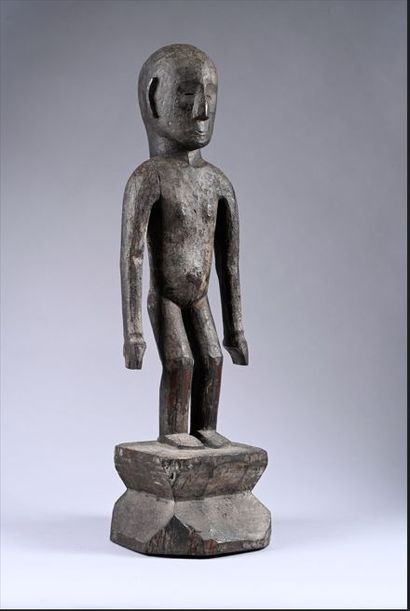
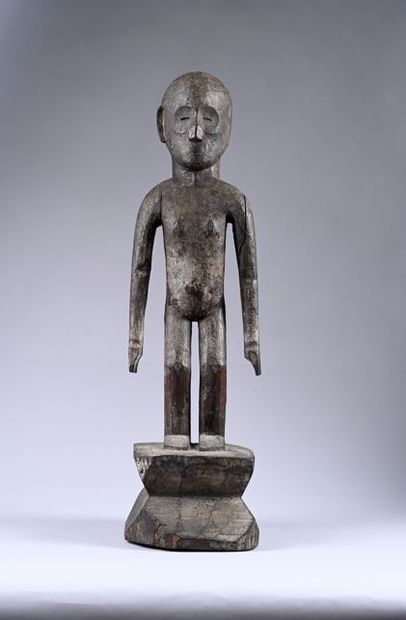
Bulul statue, Ifugao, Luzon Island, Philippines - Lot 145
Bulul statue, Ifugao, Luzon Island, Philippines
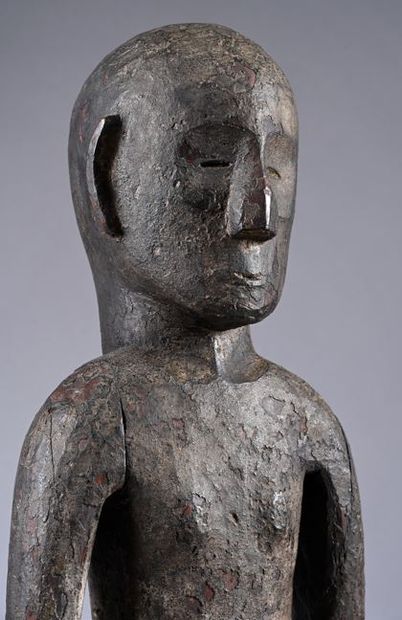
Nice patina
Dimensions: Height 67 - Width 17.7 cm
Provenance : French private collection
---
Bulul statue, Ifugao, Luzon Island, Philippines
Beautiful patina of use
Dimensions: Height 67 - Width 17.7 cm
Provenance: French private collection The Ifugao are renowned for their rice terraces in the Cordilleras of northern Luzon. This UNESCO World Heritage site is thought to date from 300 to 3,000 years ago, according to contradictory estimates by researchers. This people were one of the most studied in the early 20th century, as their belief system was considered one of the most extensive and widespread religions outside India, with over 1,500 deities divided into several classes. One of these was the generic bullul (bulul, bul-ul), made up of at least twenty-five deities named, among others, the Left-handed, the Second Harvest, the Burnt, the Attelé.... The ancient bullul figures were venerated and in some agricultural districts addressed by name: Gamar and Lablaban in Hingyon, Dolionan in Mompolia. Others, in private collections, have retained their names: Muninmin de Tud-dani, Kaloko de Nabyon, Naphek de Piwong, Kuntig de Pugu, Munlana de Montabyong, Ala-was de Puitan, Kumpayde Kambulo and Balulang de Cudog.
Bullul figurines are invoked or activated in two rituals: the first is a healing ceremony to appease the Dalom deity. The second is to consecrate, or activate, the deity of the rice granary.
--
The Ifugao are famous for their rice terraces in the Cordilleras of northern Luzon. This UNESCO World Heritage site is said to be 300-3000 years old, according to conflicting estimates by researchers. This people was one of the most studied in the early 20th century, as their belief system was considered to be one of the largest and most widespread religions outside of India, with more than 1,500 divinities divided into several classes. One of them was the generic bullul (bulul, bul-ul), composed of at least twenty-five divinities named, among others, the Gaucher, the Second Harvest, the Burned, the Attelé... The ancient bullul figures were venerated and in some agricultural districts they were addressed by their names: Gamar and Lablaban in Hingyon, Dolionan in Mompolia. Others, in private collections, have kept their names: Muninmin de Tud-dani, Kaloko de Nabyon, Naphek de Piwong, Kuntig de Pugu, Munlana de Montabyong, Ala-was de Puitan, Kumpayde Kambulo and Balulang de Cudog.
Bullul figurines are invoked or activated in two rituals: the first is a healing ceremony to appease the deity Dalom. The second ritual consists in consecrating, or activating, the divinity of the rice granary.
My orders
Sale information
Sales conditions
Return to catalogue