


Lot n° 161
Estimation :
20000 - 30000
EUR
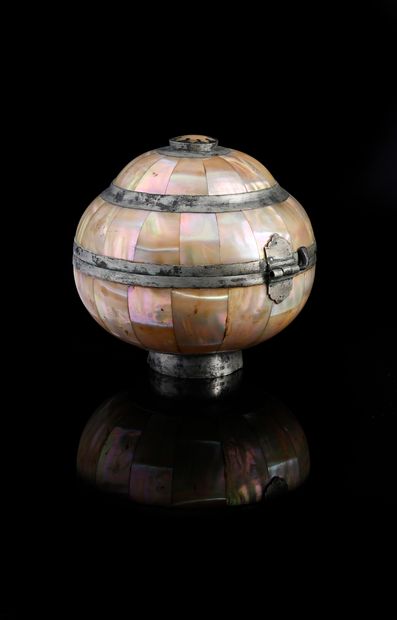
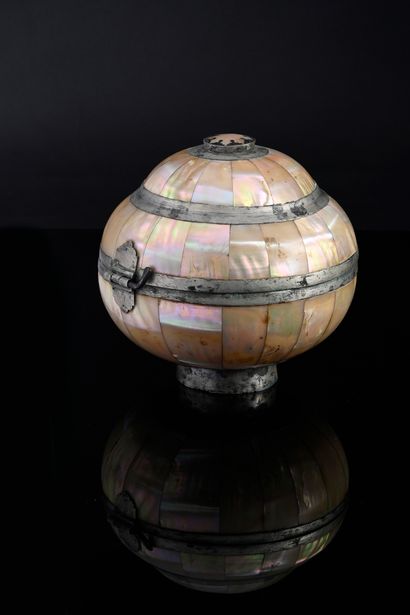
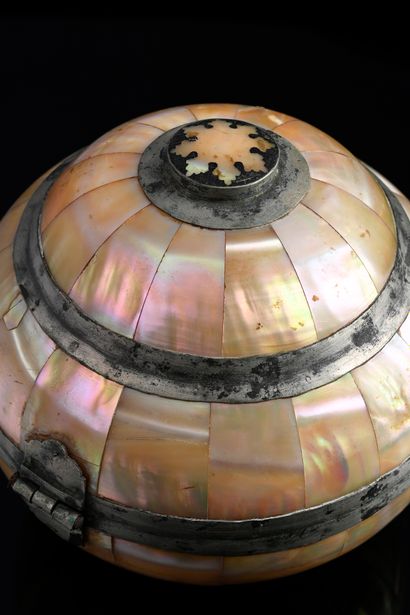
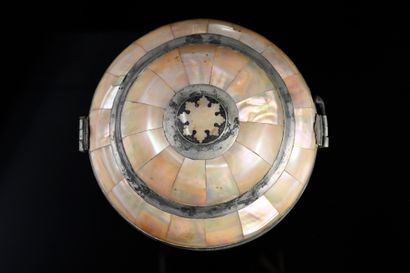
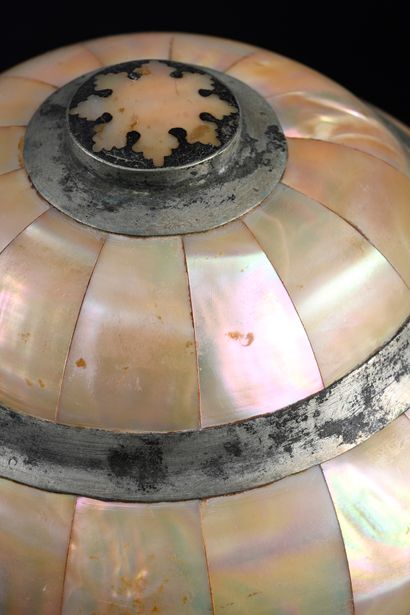
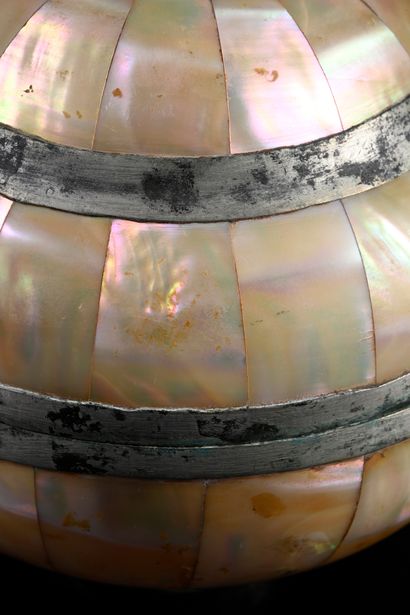
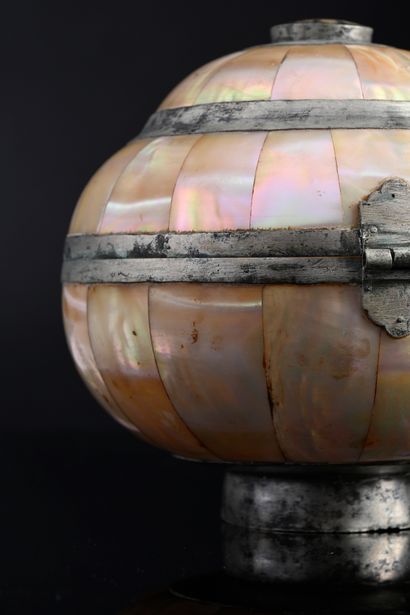
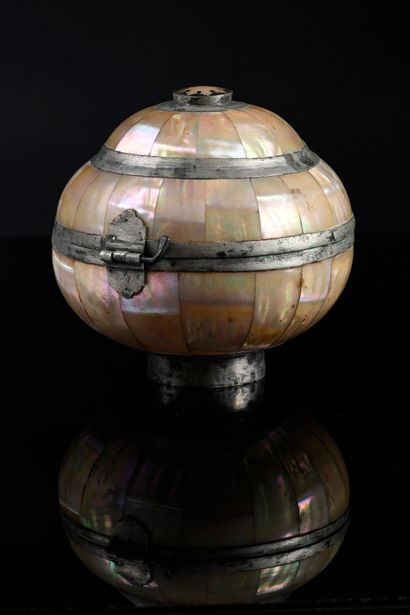
Mother-of-pearl box with silver-plated brass mounting. The h - Lot 161
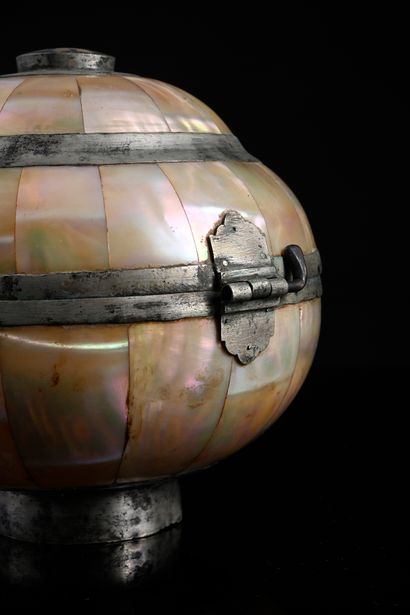
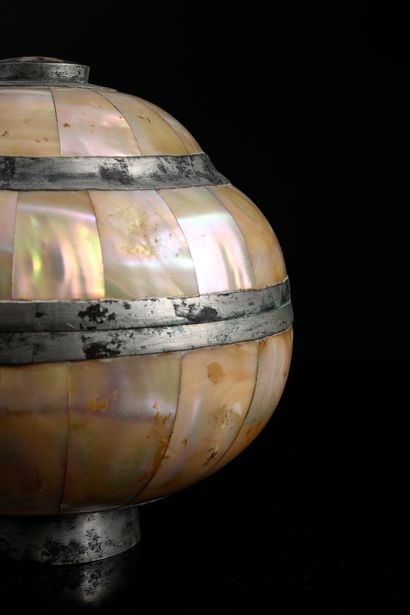
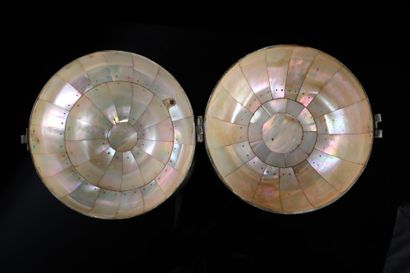
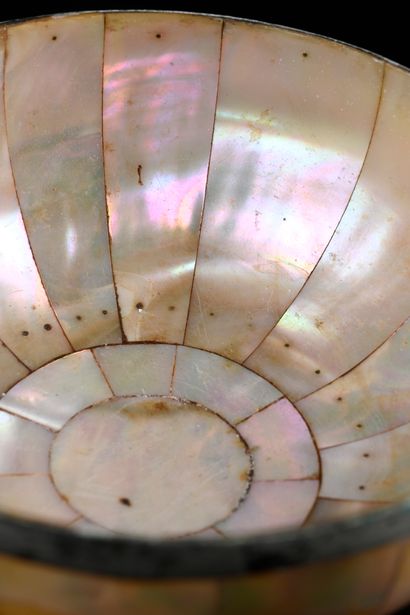
Mother-of-pearl box with silver-plated brass mounting. The hemispherical bowl is made of curved mother-of-pearl strips riveted to the lip and base; the bottom is adorned with a circular mother-of-pearl piece. The lid, ovoid in shape with protruding edges, opens with a removable latch; it features a metal hoop at mid-height, and a floral mother-of-pearl top ornament inlaid with asphalt.
India, Gujarat, late 16th / early 17th century H. 13 cm - D. 14.3 cm
(wear and tear, minor restorations to hinge and veneer)
The province of Gujarat, on the west coast of India, was mentioned by Western merchants as early as the early 16th century for its production of decorative objects and furniture in mother-of-pearl. This shimmering material could have been derived from a variety of gastropods, principally the large turban (turbo marmoratus) and the pearl oyster (pinctada sp.), two species widespread in the Persian Gulf and along the Gujarat coastline. Around 1595, the Persian chronicler Abul al-Fazl (1551-1602), who was close to the Mughal court, attests to the existence of workshops in the Ahmedabad region. Indeed, the capital of Gujarat was undoubtedly the site of the first production centers, and other towns such as Khambhat (Cambay) and Surate later became famous for this industry.
Initially destined for the Mughal court, Gujarati mother-of-pearl pieces were soon shipped to the Middle East, via the Arabian Sea, and along the east coast of Africa. From the early 16th century onwards, the European craze for these objects owed much to the presence of the Portuguese in the East Indies, and their decisive role in maritime trade. According to Portuguese historian Gaspar
Correia (1492-1563), the explorer Vasco da Gama received from the Sultan of Malindi, during his first voyage to the Indies in 1498, a sumptuous bed decorated with gold and mother-of-pearl, made in Khambhat.
Royal Portuguese collections were the first to welcome such pieces: a remarkable number of mother-of-pearl objects from Gujarat appear in 16th-century Portuguese inventories.
Their success was soon confirmed by other European courts, whose growing demand led to increased production and accelerated exports. Thus, during the reigns of François I (1515-1547) and Henry VIII of England (1509-1547), numerous Indian mother-of-pearl pieces were imported into France and Great Britain, where they were frequently included in New Year's gifts.
Our box belongs to the first of the three categories defined by specialists of this production: pieces whose structure is entirely made of mother-of-pearl or, more rarely, of a wooden device covered with a mother-of-pearl veneer. In larger dimensions, its shape is reminiscent of the small "Iranian" type wine goblets, two very similar examples of which are preserved in a private collection in Lisbon (fig. a). This object also has the advantage of preserving its original brass mounting, which was often modified and replaced by a gilded silver mounting once the object arrived in Europe.
The British Museum (inv. no. AF 3171) holds a similar example, with a mounting made in England in the 17th century.
(fig. b)
Books consulted
Portugal and the world. Symbioses artistiques aux XVIème et XVIIème siècles [catalog of the São Roque Gallery. Antiguidades & Galeria de arte], Lisbon, 2022, p. 88-89
H. M. Crespo, ed, A Mesa do Príncipe. Jantar e Cear na Corte de Lisboa (1500-1700): prata, madrepérola, cristal de rocha e porcelana, [Pedro Aguiar-Branco Gallery catalog, March 2018], Lisbon, 2018, p. 178-179.
My orders
Sale information
Sales conditions
Return to catalogue