


Lot n° 369
Estimation :
4000 - 6000
EUR
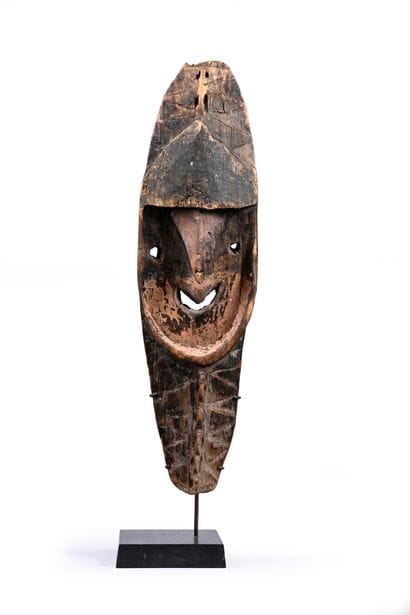
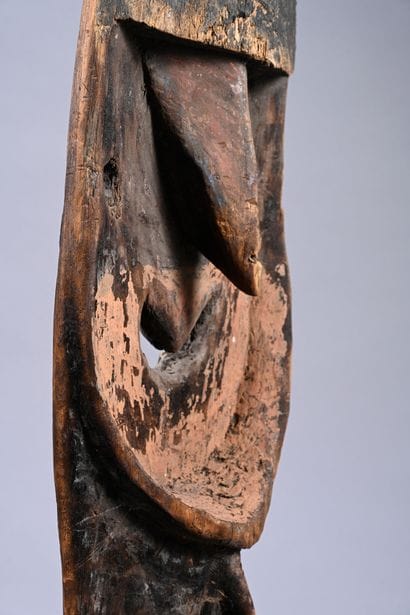
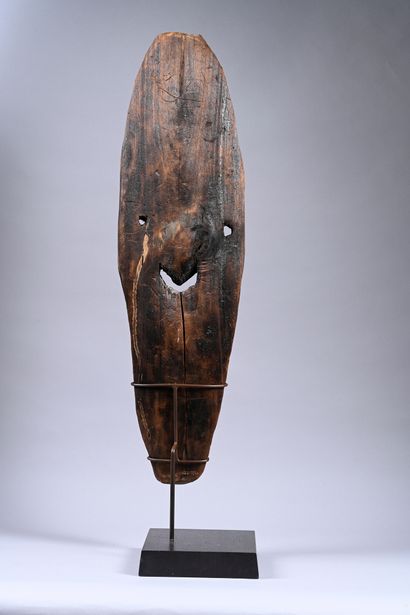
Figure of fertility linked to "Kwaga" yams (according to Dou - Lot 369
Figure of fertility linked to "Kwaga" yams (according to Douglas Newton's notes), Nukuma people, Washkuk Mountains, Upper Sepik, Papua New Guinea
Early 20th century
Carved wood and pigments
H. 82 cm
Provenance :
Collected in the field by Douglas Newton, 1973
Douglas Newton Collection (1920-2001), New York, inventory number "Nu 15".
John & Marcia Friede Collection, Jolika, acquired from previous owner in 2002
Marc Assayag Collection, Montreal
John Dubrow Collection, New York
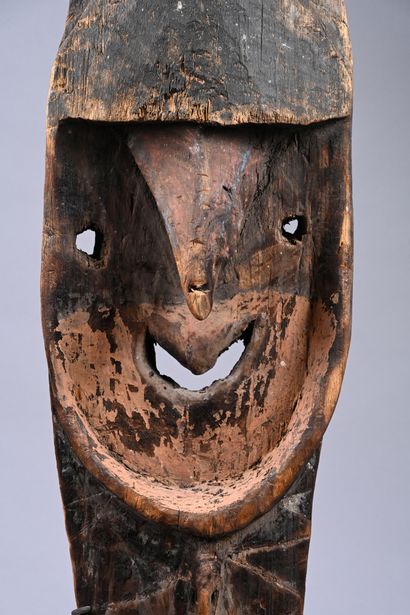
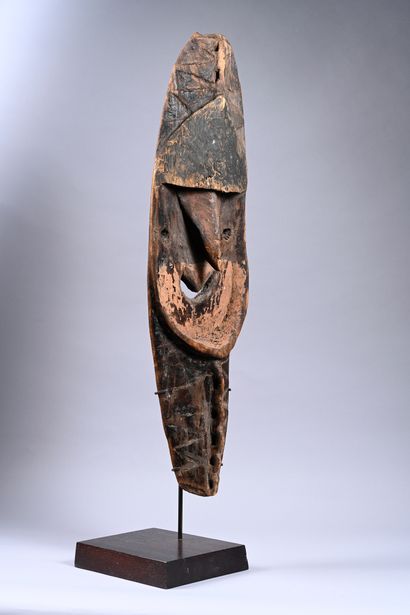
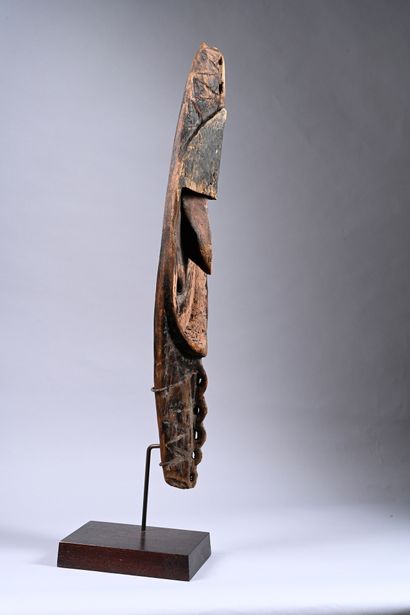
Kwoma sculpture in wood, residues of natural pigments, with the face of a female figure at its center, placed as if in offering on two tongues of chimeras, totemic animals with claws, hooks and fish. The long, slender piece is covered with traditional zigzag rhomboid motifs on the lower part of its face.
This type of scumpture is used by the Nukuma people for rituals and ceremonies linked to the cultivation and harvesting of yams. "The most important Kwoma ritual is associated with the cultivation of yams (kwow sukwiya). The yam is considered a supernatural entity. It can only be eaten when the spirits responsible for its cultivation have been honored. This ritual is performed in the great korobo ceremonial houses, also called "houses of men" (in tok pisin, haus boi) or "house of spirits" (in tok pisin, haus tambaran)."
The Kwoma do not maintain the houses of men. Their lifespan is therefore limited. When the house is too damaged, the Kwoma remove the ceremonial drums and certain carvings and leave the house to rot.
This limited temporality, not destined to last, the deterioration of these small ceremonial houses, also explains the rarity of this type of mask having lasted in time, often removed before collapse, they could often disappear by dint of being moved.
"The yam ritual is made up of three ceremonies: Yena, Mija and Nowkwi. These three ceremonies are part of an initiation cycle reserved for men. The leaders of the ceremonies are harapa ma "great men", recognized in their clan for their knowledge of the songs, mythology and procedure to be followed in carrying out the ritual." p ;78
This mask is therefore, as Nexon writes, linked to fertility, "between two distinct ceremonies, Yena, the rite linked to the yam harvest, and Mija, the rite linked to yam growth."
The third and final ceremony, Nowkwi, symbolizes the perpetual fertility of the yam gardens. It aims to satisfy the ancestors in order to obtain good harvests in the future.
My orders
Sale information
Sales conditions
Return to catalogue